

Cart abandonment popups: recover the session, not the inbox
 Emel Dalabasmaz
Most carts do not fail because the visitor missed a coupon. Baymard's 50-study average sits at 70.22% abandonment, and the top fixable reasons are extra costs, slow delivery and forced accounts. An on-site popup can state shipping, offer guest checkout or ask why they are leaving. It cannot repair a 14-field checkout.
Why do carts get abandoned in 2026?
Baymard Institute last updated its compilation on 22 September 2025. Across 50 published studies the average abandonment rate is 70.22%. In the same research programme, 42% of US shoppers said they were just browsing. Ignore that group and the remaining reasons are design problems: 40% extra costs too high, 20% delivery too slow, 19% did not trust the site with a card, 18% were asked to create an account, 17% found checkout too long.
A popup that only screams "10% off" treats every leaver as a price shopper. Some of them needed the shipping total on the product page. Some needed guest checkout. Some needed a returns line.
| Reason given | Share | What a popup can do | What actually fixes it |
|---|---|---|---|
| Extra costs too high | 40% | Print the shipping total and the gap to free delivery before checkout | Publish the real landed cost on the product page |
| Delivery too slow | 20% | State the estimate honestly, by postcode | A faster carrier option, or a clearer promise |
| Did not trust the site with a card | 19% | Show returns window, payment marks and a real address | A registered address, reviews, no fake timers |
| Asked to create an account | 18% | Point at guest checkout in one line | Make guest checkout the default path |
| Checkout too long | 17% | Nothing useful | Cut the field count |
| Just browsing | 42% of US shoppers | Nothing. Do not discount a window shopper | Nothing. This group is not a leak |
Read the last column first. Two of these six are fixed by copy an overlay can carry; the rest are checkout work wearing a popup-shaped disguise.
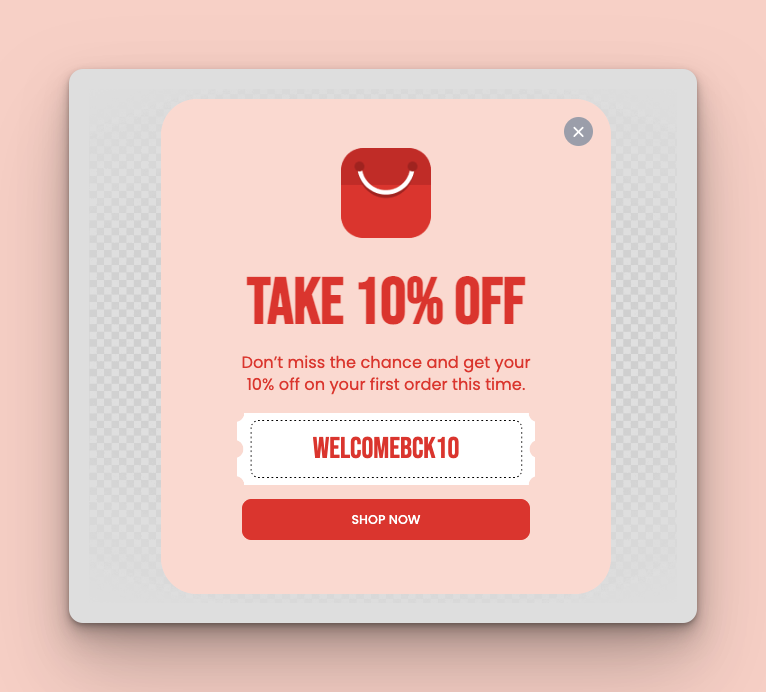
Match the overlay to the reason:
- cart value below the free-shipping threshold: show how much is left, not a random code
- first-time visitor on cart: trust marks, returns and payment logos
- returning visitor with a full cart: reminder of items, then a small incentive if you must
- anyone hitting a forced-account wall: point at guest checkout, or say you will email the cart
Does exit-intent still work when most traffic is on a phone?
Classic exit-intent watches the cursor leave the viewport toward the address bar. Phones have no cursor. If your only trigger is mouseleave at clientY < 0, most of your sessions never see the campaign.
Use a mobile stand-in, and test it on a real device:
- back-button or history intercept (easy to get wrong; never trap the user)
- pause after 20 to 30 seconds of no scroll or tap on the cart page
- a sticky cart bar that is always visible, instead of a modal
- a "save this cart" control the shopper opens on purpose
OptiMonk lists unreliable mobile exit-intent as a limitation in our own profile. Privy is best for Shopify merchants who want the on-site save and the follow-up email in one tool, because a recovered cart is often an email 30 minutes later, not a modal. OptinMonster is the better pick if you will split-test the offer against a shipping-total variant and want the reporting.
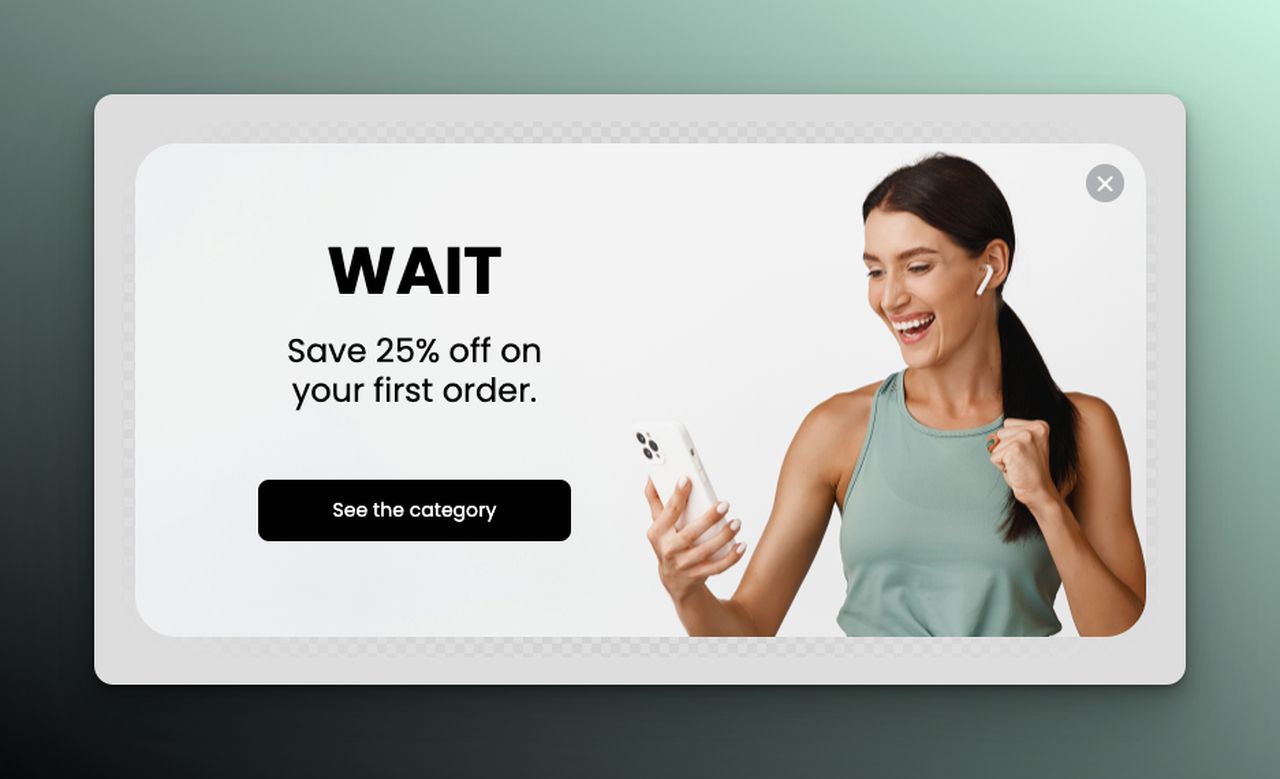
Do not fire the cart popup on the first product view. Wait until there is a cart, or at least an add-to-cart event.
What should you show besides a coupon?
Lead with the cost the shopper cannot see. Baymard's 40% "extra costs too high" finding is the one you can often fix in copy: "Shipping is £3.95, free over £50. You are £8.20 short." That is more honest than minting a 15% code that trains people to abandon on purpose.
Other overlays that earn their keep:
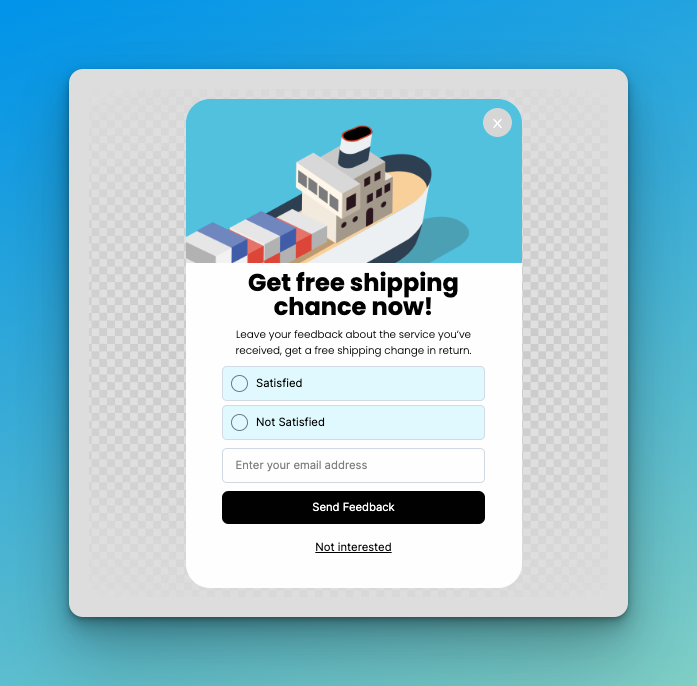
- a free-shipping progress bar that stays on cart and collection pages
- a one-question "why are you leaving?" with answers you can act on (shipping, size, payment)
- a trust strip: returns window, payment marks, delivery estimate by postcode
- a later email capture only if they refuse the checkout save: "Send me this cart"
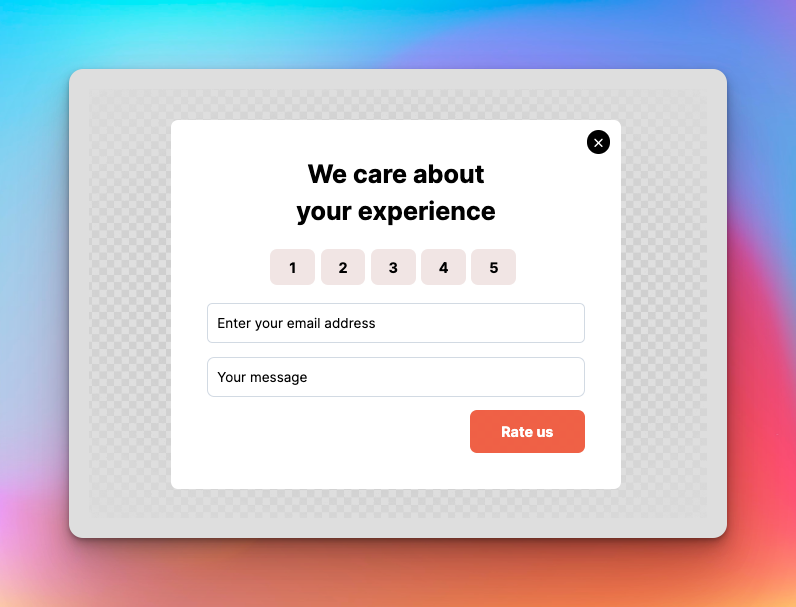
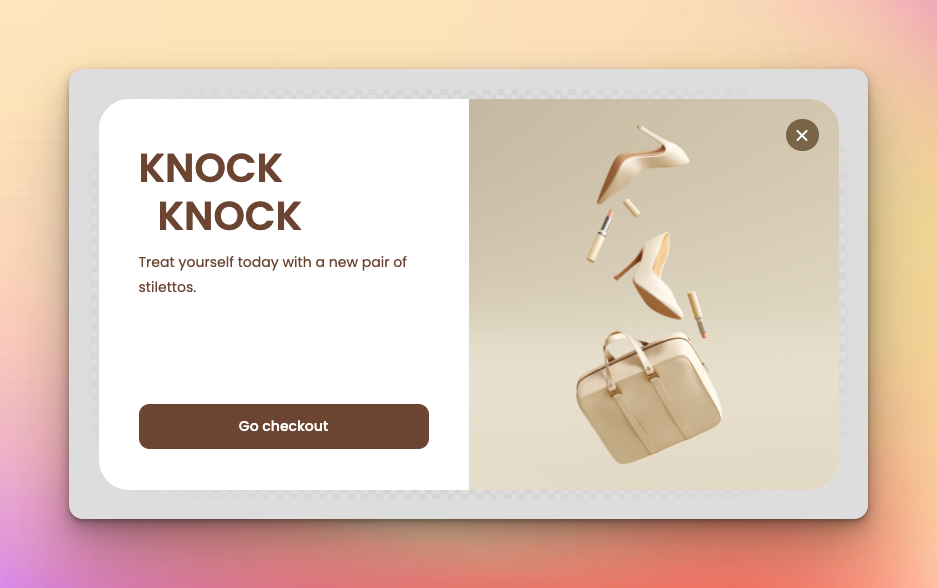
Urgency copy is fine when stock or a real sale window is true. Fake scarcity is a trust problem, and 19% of Baymard's leavers already did not trust the card form.
Adoric is best when you want to segment on cart events and cookies rather than show the same overlay to every leaver. Poptin is enough for a small store that wants exit-intent and A/B testing without a subscription on day one.
How does an on-site popup sit next to cart email?
They are sequential, not duplicates.
- On-site, while the tab is still open: shipping math, guest checkout, save-cart.
- Email or SMS, after they have left: item image, cart link, expiry.
Shopify stores that already live in Klaviyo usually keep the popup in Klaviyo forms or Privy and let the ESP send the reminder. Do not fire both an on-site 10% overlay and a 10% email 10 minutes later for the same session. Shoppers notice.
Consent still applies. An email you send because they submitted a "save my cart" form is easier to justify than an email you send because a cookie said they had a cart. If you collect a number for SMS recovery, that is TCPA written consent in the US, not a pre-ticked box. See phone number popups.
On mobile search traffic, keep the overlay partial. Google's intrusive interstitial rule is about blocking content after a search click. A cart page overlay is closer to a checkout aid, but a full-screen takeover still reads as a wall.
Common questions
Should a cart popup offer a discount every time?
No. A code that fires on every exit teaches regular shoppers to abandon on purpose, and it pays margin to the 42% who were only browsing. Lead with the fact they cannot see — the shipping total, the free-delivery gap, guest checkout — and hold the discount for a returning visitor with a full cart who has already refused the save.
How many cart popups should one session see?
One. A free-shipping progress bar can stay visible because it is not a modal, but a session should meet at most one overlay. A shipping bar plus an exit coupon plus a wheel competes with itself, and each extra script costs INP on the page where the money is.
Does a cart popup count as an intrusive interstitial?
A cart page is rarely a search landing page, so the rule bites less there than on a blog post. The risk is the shape, not the URL: a full-screen takeover after a search click is what Google's guidance describes, and a partial sheet or bar is not. Keep the overlay partial on mobile and the question does not arise.
Is exit-intent worth buying if most traffic is mobile?
Only if the tool also ships a mobile trigger you would use. Cursor-based exit-intent is a desktop feature. If your desktop share is small, an inactivity timer on the cart page and a persistent subtotal bar will reach more sessions than the feature the pricing page advertises.
Which builder fits cart abandonment popups
The tools this page argues for, best fit first, with the entry price and billing basis taken from each vendor’s own pricing page.
| Tool | Best for this job | Free tier | Starts at | Metered on |
|---|---|---|---|---|
| Privy | The on-site save and the follow-up email in one product | Free trial only | $24Pop-ups & Displays, per month | Monthly pageviews |
| OptinMonster | Split-testing the offer against a shipping-total variant | None | $9Basic, per month, billed annually | Campaign impressions |
| Adoric | Segmenting on cart events and cookies, not one overlay for everyone | Free plan | $100Basic, per month | Monthly pageviews |
| Poptin | Exit-intent and A/B testing on a free plan | Free plan | $25Basic, per month | Monthly visitors |
Prices researched September 2026. Several tools charge a different rate after the first term; each tool’s own pricing breakdown carries the renewal figure. Where these numbers come from is set out below.
How this page was researched
- Prices come from the vendor, on a date
- The 4 figures in the table above were read from each vendor’s own pricing page in September 2026, not from a feature feed or a comparison chart. Each tool’s pricing breakdown links the page the number came from and states the date it was checked, so a figure that has since moved is visible as stale rather than presented as current.
- Review sentiment is quoted, not scored
- G2’s own summary was collected for OptinMonster in August 2026. Privy, Adoric and Poptin have no such summary on G2, so they appear here without one rather than with a rating we made up. No page on this site prints a star score, because a single number hides the trade-off the comparison exists to explain.
- Every figure names its source
- Conversion and abandonment numbers on this page are vendor and institute datasets with the publisher, the sample size and the publication date attached, so you can weigh who measured them. Where two datasets disagree, both are shown rather than averaged into one comfortable figure.
- Who wrote it
- Emel Dalabasmaz, SEO Executive at Flatart, working in popup builders, conversion rate optimization and on-site messaging. Full profile and credentials, and what this site is and is not.
Other popup types
About the author

SEO Executive at Flatart
Emel Dalabasmaz graduated in Advertising and Public Relations from Anadolu University. She began in social media and carried that grounding — content, brand communication and performance — into SEO. For more than ten years she has worked on growth for brands across a range of industries, pairing a communications perspective with data and technical analysis to build a digital presence that holds up over time. At Flatart, she has worked for more than ten years with over 250 brands and set up popups for more than 70% of them. She has tried the popup tools covered by PopupBuilder.io for agency customers and read G2 customer reviews as part of her product research.
- Education
- Advertising and Public Relations, Anadolu University
- Writes about
- Popup builders, Conversion rate optimization, On-site messaging, SaaS pricing research, SEO, Technical SEO, Content strategy, Digital marketing