

Gamified popups: wheels that convert, lists that stay clean
 Emel Dalabasmaz
A gamified popup is a wheel, scratch card or catch-the-gift overlay that trades a play for an email. Sleeknote's 2026 set of 516 million views put spin-to-win at 8.67% conversion against 3.70% without the game. That lift is real. So is the junk-list risk if every slice is a win and the prize is a code people already had.
Do gamified popups actually convert better?
In Sleeknote's 2026 popup statistics, spin-to-win converted at 8.67%, compared with 3.70% for campaigns that did not use it, across 516,866,935 views. Their overall average was 4.23%. Omnisend's 2025 study of 1.24 billion displays put gamified spin-to-win forms in a 3.5% to 3.6% band against 1.9% to 2.1% for standard ones.
Two vendors, two stacks, same direction: the game outperforms a plain "10% off" box. It does not outperform a bad offer. If the wheel always lands on 10% and your sitewide bar already says 10%, you paid for animation.
| Dataset | Campaign | Converted at | Sample |
|---|---|---|---|
| Sleeknote 2026 | Spin-to-win | 8.67% | 516,866,935 views |
| Sleeknote 2026 | No gamification | 3.70% | Same set |
| Sleeknote 2026 | All campaigns | 4.23% | Same set |
| Omnisend 2025 | Gamified spin-to-win | 3.5 to 3.6% | 1.24bn displays |
| Omnisend 2025 | Standard form | 1.9 to 2.1% | Same set |
The two vendors disagree about the level and agree about the gap. Sleeknote's set runs roughly twice as high across every campaign type, which is a statement about whose stores they are, not about whose wheel is better. Use the ratio within a row's dataset; do not carry Sleeknote's 8.67% into an Omnisend-shaped forecast.
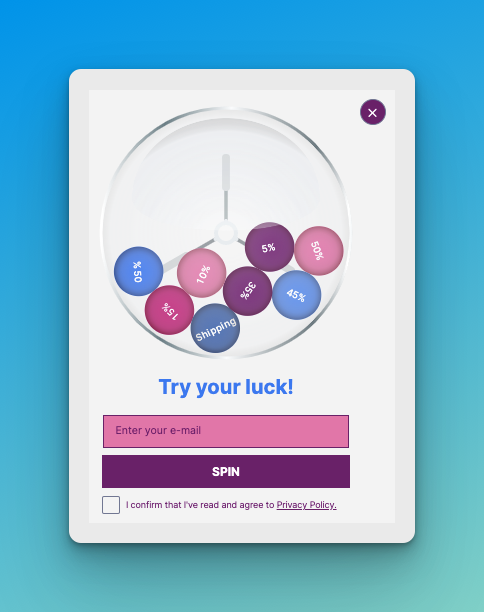
Use a wheel when:
- first-time visitors on a store that already discounts, and you need a reason to collect the address
- a seasonal event (the wheel is the event)
- you can print a real "better" slice (free shipping, 15%) that is rare, and a "try again" slice that is honest
Skip it on B2B demo sites, on checkout, and on any page where a full-screen overlay would trip Google's intrusive interstitial rule for mobile search traffic. A wheel that covers the viewport on first load is still a wall, even if it spins.
How do you set odds without training people to lie?
Write the slices so a sceptical visitor would still believe them.
- Put the common prize on most of the wheel. If 70% of spins are 10% off, say so in the copy ("most spins win 10%").
- Keep one miss or low-value slice. A wheel that cannot lose is a form with extra JavaScript.
- Deliver the code in email, not only on the thank-you screen. People close the tab.
- Cap plays at one per browser, and block the campaign for existing subscribers.
Local gambling and prize-draw rules vary. I am not your lawyer. If you run "enter to win an iPhone," that is a promotion with a different legal stack than a coupon wheel. Get that checked before you launch.
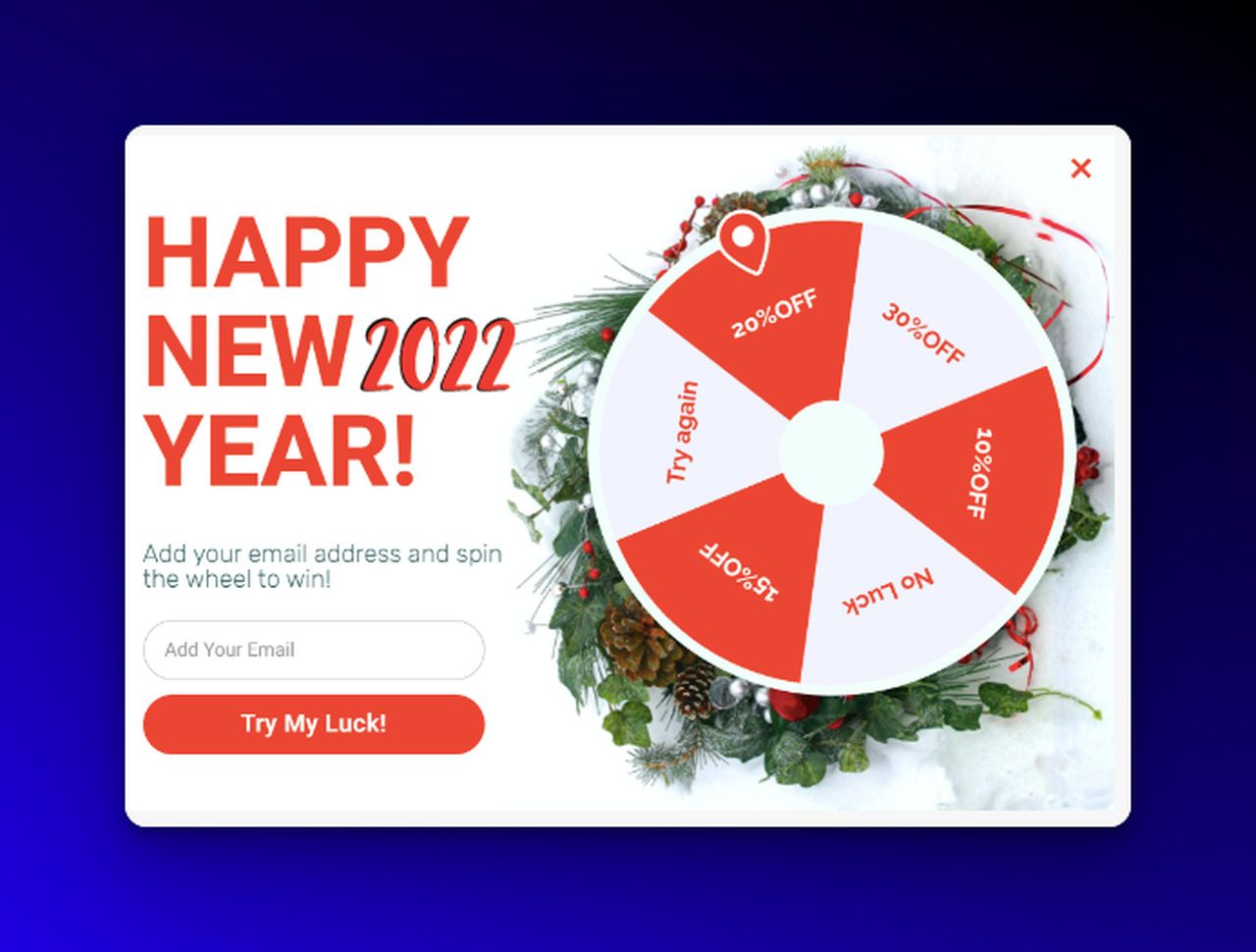
Mobile: a wheel that needs a precise drag gesture will fail. Use a big Spin button. Keep the overlay a sheet, not a desktop-sized circle scaled down until the close target is 8 pixels.
Which tools are built for this, and which are not?
- OptiMonk is best for stores that want spin-to-win and similar campaigns without building the wheel from scratch. That is the job we tagged it for.
- Adoric has spin-to-win and a falling-gift game; best if you already segment on behaviour and cookies.
- Privy is the Shopify-shaped pick when the wheel should dump into the same list that sends the welcome flow.
- Popupsmart can run a gamified template if you need it live quickly. It is not the reason to pick the tool.
Hello Bar is the wrong shape. A top bar cannot host a wheel, and should not try.
What consent still applies when it is "just a game"?
The game is a form. You still need a positive opt-in for marketing email under UK PECR in most B2C cases, and GDPR Article 7 still wants that consent specific. "Spin to accept cookies, email and SMS" is one checkbox too far.
If a slice collects a phone number, treat it as a phone popup: US marketing texts need prior express written consent under 47 CFR 64.1200.
Cookie banners stay separate. Do not delay the CMP behind a wheel. Do not set marketing cookies from the popup script before consent.
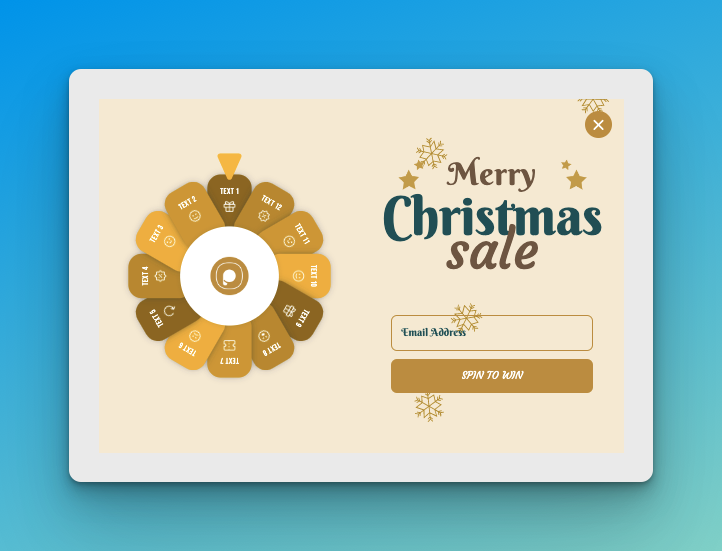
If the only prize you can afford is the same 10% you already run, use a plain email popup with a delay. The wheel's lift in the vendor data comes from novelty and from asking for the address after a play, not from JavaScript confetti.
Common questions
Does a wheel damage list quality?
It can, and the welcome flow is where you find out. A game collects addresses from people who came for the game, so open rates on the first three sends are the number to watch rather than the signup rate the popup reports. If the wheel doubles signups and halves first-send opens, you have moved cost, not revenue.
Can you run a wheel on a B2B site?
Almost never. The published lift comes from stores that already discount, where a coupon is a normal thing to win. A procurement lead evaluating software reads a spinning wheel as a signal about the vendor, and the prize you can legitimately offer — a discount on an annual contract — is not yours to give in a popup.
Should existing subscribers see the wheel?
No. Suppress the campaign for anyone already on the list and for anyone holding an unused code. Letting a subscriber win a discount they already have teaches them the list is worth leaving and re-joining, and it corrupts the signup number you are using to judge the campaign.
Is a scratch card treated differently from a wheel?
Mechanically no, legally sometimes. Both trade a play for an address, and both are forms that need a marketing opt-in. The line that matters is the prize: a coupon everyone wins is a discount with animation, while "enter to win an iPhone" is a prize draw with registration, terms and eligibility rules that vary by country. Get that second kind checked before launch.
Which builder fits gamified popups
The tools this page argues for, best fit first, with the entry price and billing basis taken from each vendor’s own pricing page.
| Tool | Best for this job | Free tier | Starts at | Metered on |
|---|---|---|---|---|
| OptiMonk | Spin-to-win without building the wheel | Free plan | $29Essential, per month | Monthly pageviews |
| Privy | The wheel feeding the same list that sends the welcome flow | Free trial only | $24Pop-ups & Displays, per month | Monthly pageviews |
| Adoric | Spin-to-win and a falling-gift game, on behaviour segments | Free plan | $100Basic, per month | Monthly pageviews |
| Popupsmart | A gamified template you need running quickly | Free plan | $32.50Basic, per month, billed annually | Monthly pageviews |
Prices researched August 2026. Several tools charge a different rate after the first term; each tool’s own pricing breakdown carries the renewal figure. Where these numbers come from is set out below.
How this page was researched
- Prices come from the vendor, on a date
- The 4 figures in the table above were read from each vendor’s own pricing page in August 2026, not from a feature feed or a comparison chart. Each tool’s pricing breakdown links the page the number came from and states the date it was checked, so a figure that has since moved is visible as stale rather than presented as current.
- Review sentiment is quoted, not scored
- G2’s own summary was collected for OptiMonk and Popupsmart in August 2026. Privy and Adoric have no such summary on G2, so they appear here without one rather than with a rating we made up. No page on this site prints a star score, because a single number hides the trade-off the comparison exists to explain.
- Every figure names its source
- Conversion and abandonment numbers on this page are vendor and institute datasets with the publisher, the sample size and the publication date attached, so you can weigh who measured them. Where two datasets disagree, both are shown rather than averaged into one comfortable figure.
- Who wrote it
- Emel Dalabasmaz, SEO Executive at Flatart, working in popup builders, conversion rate optimization and on-site messaging. Full profile and credentials, and what this site is and is not.
Other popup types
About the author

SEO Executive at Flatart
Emel Dalabasmaz graduated in Advertising and Public Relations from Anadolu University. She began in social media and carried that grounding — content, brand communication and performance — into SEO. For more than ten years she has worked on growth for brands across a range of industries, pairing a communications perspective with data and technical analysis to build a digital presence that holds up over time. At Flatart, she has worked for more than ten years with over 250 brands and set up popups for more than 70% of them. She has tried the popup tools covered by PopupBuilder.io for agency customers and read G2 customer reviews as part of her product research.
- Education
- Advertising and Public Relations, Anadolu University
- Writes about
- Popup builders, Conversion rate optimization, On-site messaging, SaaS pricing research, SEO, Technical SEO, Content strategy, Digital marketing