

Phone number popups: SMS opt-in without a TCPA mess
 Emel Dalabasmaz
A phone popup is an SMS or call opt-in, not a second field on a newsletter form. In the US, marketing texts generally need prior express written consent. Since 11 April 2025 the FCC requires you to honour opt-outs by any reasonable means within ten business days. Keep the number optional, and keep email on its own form.
When is it worth asking for a number at all?
When you will text something the visitor asked for: back-in-stock, shipping updates, an abandoned-cart reminder they opted into, a booking confirmation. Not when you want a bigger list for a blast.
Omnisend's 2025 popup study (1.24 billion displays) saw conversion hold near 2.1% through three fields and drop to 1.5% at four. Adding a required phone field to an email form is how you miss the email and still fail consent for the number.
Split the jobs:
- email on the email popup
- phone on this one, with SMS copy next to the button
- a click-to-call or WhatsApp button if you do not need to store the number
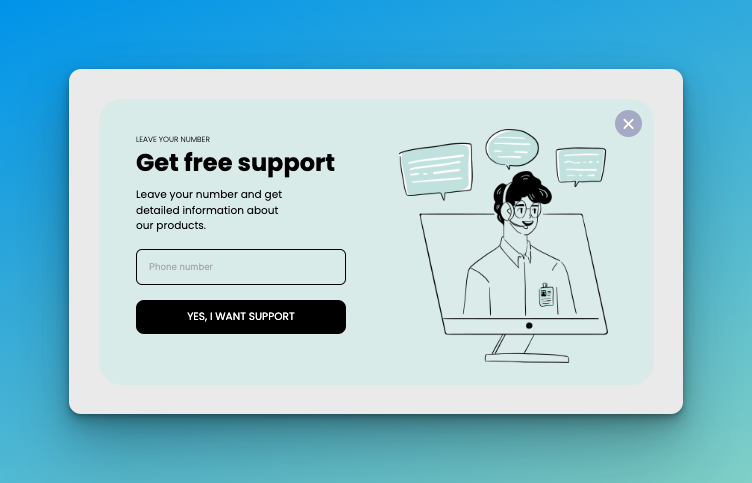
Privy is best for Shopify merchants who want email and SMS capture in one product and will send from that product. OptiMonk is a fit if the on-site campaign already collects extra fields after a first step. Do not start with a generic builder and a pre-ticked "text me offers" box.
What does US law actually require for marketing texts?
I am not your counsel. The public rules are still the ones to design against.
Under the FCC's TCPA rules at 47 CFR 64.1200, marketing texts sent with autodialing generally need prior express written consent: a written (including electronic) agreement that names the seller, the number, and that consent is not a condition of purchase. A pre-ticked box is not that.
On 11 April 2025, FCC rules on revoking consent took effect. Recipients can revoke by any reasonable method, not only the keyword you printed, and you have a reasonable time not to exceed ten business days to honour it (FCC public notice). STOP still has to work. So does "unsubscribe" in an email about the same programme.
The FCC's one-to-one consent rule for lead generators was vacated in 2025. Do not build a popup on a rule that is gone, and do not assume a vacated rule means you can bury ten brands in one tick.
Practical form copy:
- "By tapping Agree, you consent to receive marketing texts from EXAMPLE BRAND at the number you provide. Frequency varies. Message and data rates may apply. Consent is not a condition of purchase. Reply STOP to opt out, HELP for help."
- Keep that text next to the button, not only in the privacy policy.
What about the UK, EU and cookies?
UK PECR treats marketing texts as electronic mail. You generally need consent, with a narrow soft-opt-in for similar products after a sale, and an opt-out in every message. GDPR still applies to the number as personal data. The ICO's PECR cookies page is about device storage. Do not use a cookie banner as your SMS consent.
A popup script that sets marketing cookies before the CMP returns a yes is a cookie problem plus an SMS problem.
| Where | The rule | What the form has to do | Source |
|---|---|---|---|
| US, marketing texts | Prior express written consent for autodialled marketing | Name the seller, name the number, state that consent is not a condition of purchase | 47 CFR 64.1200 |
| US, opting out | Since 11 April 2025, revocation by any reasonable method, honoured within ten business days | Accept STOP and plain-language opt-outs in any channel, and stop sending | FCC |
| UK | PECR treats marketing texts as electronic mail; consent, with a narrow soft opt-in after a sale | An unticked opt-in, plus an opt-out in every message | ICO |
| UK and EU, the number itself | GDPR: a phone number is personal data | State the purpose, set a retention limit, store the consent timestamp | GDPR Article 7 |
| Anywhere, device storage | PECR and ePrivacy cover cookies, not the number | Keep the CMP separate. It is not SMS consent | ICO |
Four separate permissions, and a popup that collects a number usually needs at least two of them. None is satisfied by the cookie banner.
If you only needed a click-to-chat, skip storage. A "Message us on WhatsApp" button that opens https://wa.me/... does not collect a number for your list. That is often the right popup.
How should the popup behave on mobile?
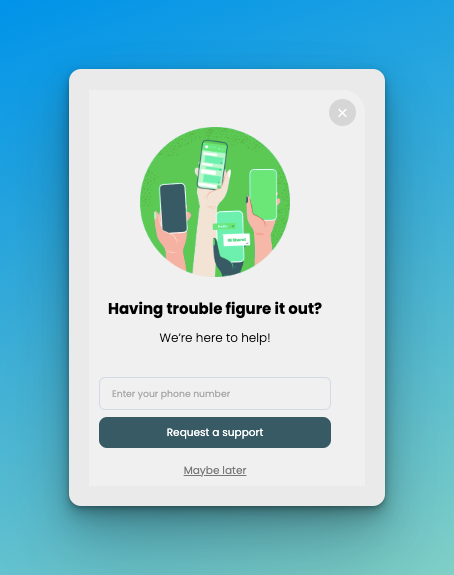
This is a phone job, so design for a thumb.
type="tel"andinputmode="numeric"- country code visible, defaulted from geo if you must, but editable
- no wheel or five-field stack in front of the number
- a tap-to-call button for service lines (
tel:), separate from SMS opt-in - never a full-screen wall on first load; Google's interstitial guidance still applies to promotional overlays after a search click
Hello Bar can carry a tap-to-call bar. It is the wrong tool for a TCPA-grade SMS form. Poptin or Popupsmart can host the form if your ESP or SMS vendor takes the webhook and stores the consent timestamp. Store that timestamp. A screenshot of the live popup is not a record.
Common questions
Is a pre-ticked SMS box ever enough?
No. US marketing texts need a written agreement the recipient actively made, and UK PECR wants a positive action for electronic mail. A box that is ticked when the form loads records nothing about what the person decided. It is also the first thing a complaint investigation looks at, because it is visible in a screenshot of your own page.
What record of consent should you keep?
The timestamp, the number, the exact wording shown at the time, and the page it was shown on. Store it wherever the send happens, so the record travels with the contact. A screenshot of today's live popup proves nothing about a form somebody submitted in March, which is the period any dispute will be about.
Does a WhatsApp button need the same consent?
A click-to-chat link does not, because you never store the number and the person started the conversation. Adding them to a broadcast list afterwards does. The distinction is whether you hold the number for your own sending, and a wa.me link that opens their app does not.
Can the same popup collect an email and a phone number?
Only with two separate controls and two statements, and the number optional. One tick covering email and SMS fails the specificity GDPR Article 7 asks for, and the extra required field pushes a working two-field form onto the wrong side of Omnisend's four-field cliff. Split the jobs across two campaigns.
Which builder fits phone number collecting popups
The tools this page argues for, best fit first, with the entry price and billing basis taken from each vendor’s own pricing page.
| Tool | Best for this job | Free tier | Starts at | Metered on |
|---|---|---|---|---|
| Privy | Email and SMS capture, sending from the same product | Free trial only | $24Pop-ups & Displays, per month | Contacts |
| OptiMonk | A number asked for after a first step, not beside the email | Free plan | $29Essential, per month | Monthly pageviews |
| Poptin | A form whose webhook stores the consent timestamp | Free plan | $25Basic, per month | Monthly visitors |
| Popupsmart | The same, when the SMS vendor takes the webhook | Free plan | $32.50Basic, per month, billed annually | Monthly pageviews |
| Hello Bar | A tap-to-call bar only — not a TCPA-grade SMS form | Free plan | $39Growth, per month, billed annually | Monthly pageviews |
Prices researched August 2026. Several tools charge a different rate after the first term; each tool’s own pricing breakdown carries the renewal figure. Where these numbers come from is set out below.
How this page was researched
- Prices come from the vendor, on a date
- The 5 figures in the table above were read from each vendor’s own pricing page in August 2026, not from a feature feed or a comparison chart. Each tool’s pricing breakdown links the page the number came from and states the date it was checked, so a figure that has since moved is visible as stale rather than presented as current.
- Review sentiment is quoted, not scored
- G2’s own summary was collected for OptiMonk and Popupsmart in August 2026. Privy, Poptin and Hello Bar have no such summary on G2, so they appear here without one rather than with a rating we made up. No page on this site prints a star score, because a single number hides the trade-off the comparison exists to explain.
- Every figure names its source
- Conversion and abandonment numbers on this page are vendor and institute datasets with the publisher, the sample size and the publication date attached, so you can weigh who measured them. Where two datasets disagree, both are shown rather than averaged into one comfortable figure.
- Who wrote it
- Emel Dalabasmaz, SEO Executive at Flatart, working in popup builders, conversion rate optimization and on-site messaging. Full profile and credentials, and what this site is and is not.
Other popup types
About the author

SEO Executive at Flatart
Emel Dalabasmaz graduated in Advertising and Public Relations from Anadolu University. She began in social media and carried that grounding — content, brand communication and performance — into SEO. For more than ten years she has worked on growth for brands across a range of industries, pairing a communications perspective with data and technical analysis to build a digital presence that holds up over time. At Flatart, she has worked for more than ten years with over 250 brands and set up popups for more than 70% of them. She has tried the popup tools covered by PopupBuilder.io for agency customers and read G2 customer reviews as part of her product research.
- Education
- Advertising and Public Relations, Anadolu University
- Writes about
- Popup builders, Conversion rate optimization, On-site messaging, SaaS pricing research, SEO, Technical SEO, Content strategy, Digital marketing