

Popups that increase sales, and the ones that only look busy
 Emel Dalabasmaz
A sales popup is an overlay with a path to a cart, not a newsletter form wearing a red button. Use it to state shipping, raise AOV, or recover a leaving cart. Baymard's 50-study average abandonment is 70.22%. Fixing extra costs and forced accounts does more than minting a new code. First-load takeovers still fail Google's interstitial test.
Which sales jobs can a popup actually do?
Three, if you are honest:
- State a cost the shopper cannot see yet (shipping, returns, delivery date).
- Raise order value (threshold to free shipping, a complementary item, a bundle).
- Recover a leaving session (cart abandonment).
List growth is a different page: email popups. Mixing "10% off your first order" into every URL trains regulars to wait for the overlay and trains Googlebot to see a wall.
| Job | Fires on | What the overlay says | Judge it by |
|---|---|---|---|
| State a hidden cost | Product and collection | Shipping total, returns window, delivery date | Add-to-cart rate, not clicks on the overlay |
| Raise order value | Cart | The gap to free shipping, or one matched item | AOV and discount rate read together |
| Recover a leaving session | Cart, on exit or inactivity | The saved cart first, an incentive only if refused | Completed orders carrying the campaign code |
| Grow the list | Content pages | This belongs on the email popup | Signups, in a report that is not this one |
| Fill Q4 with activity | Nowhere | Nothing | Skip it |
Rows one to three are the whole product. Row four is a different campaign wearing the same widget, and row five is the reason most stores conclude popups do not work.
Baymard updated its 50-study average on 22 September 2025: 70.22% of carts are abandoned. Among people who were not "just browsing," 40% cited extra costs, 18% a forced account, 17% a long checkout. A popup cannot shorten a 23-field checkout. It can say "guest checkout is on the next screen" and "shipping is £3.95, free over £50."
Where should a sales overlay show?
On the pages that match the job.
- collection and product: shipping threshold, a real limited run, a size guide
- cart: complementary item, threshold remainder, guest-checkout reminder
- leaving cart: the recovery offer, once
- never: checkout step 2, password reset, blog posts that rank for informational queries if you care about Google's intrusive interstitial rule
Delay it. Omnisend saw 2.4% signup conversion after a 6 to 10 second delay versus 1.9% on immediate display (2025, 1.24 billion displays). Sales overlays are not signup forms, but the same patience applies. Let the product image load. LCP is still a Core Web Vital, good at 2.5 seconds or under (web.dev).
On phones, a bottom bar or a sheet beats a centered modal. Exit-intent that watches the mouse does not fire. Use inactivity on cart, or a persistent subtotal bar.
What copy raises AOV without looking desperate?
Specific beats loud.
- "£8.20 to free shipping" on cart, with a link to a low-cost add-on
- "This jacket is often bought with the waterproof pouch, +£12"
- "Order by 14:00 for dispatch today" when that is operationally true
- a code only after they try to leave, and only if your margin holds
Fake countdown timers that reset on refresh are how you join the 19% of Baymard respondents who did not trust the site with a card. If the sale ends Sunday, schedule the campaign to die Sunday.
OptiMonk is best when the overlay is a product recommendation or a shipping bar you will actually personalise. Sleeknote is best for promotion design across several domains. Privy is best on Shopify when the overlay should also start the email or SMS follow-up. Poptin is a fair small-store pick if you want testing without a contract.
How do you know it made money?
Track orders, not clicks on the overlay.
- attach a unique code or a UTM on the CTA
- exclude sessions that already had the code
- watch discount rate and AOV together; a 15% code that drops AOV 18% is not a win
- A/B the overlay against a bar, and against nothing, for a full week including a weekend
OptinMonster is the pick if split tests and the report are the reason you are buying a tool. If you will not read the report, a native Shopify form or a theme bar is cheaper.
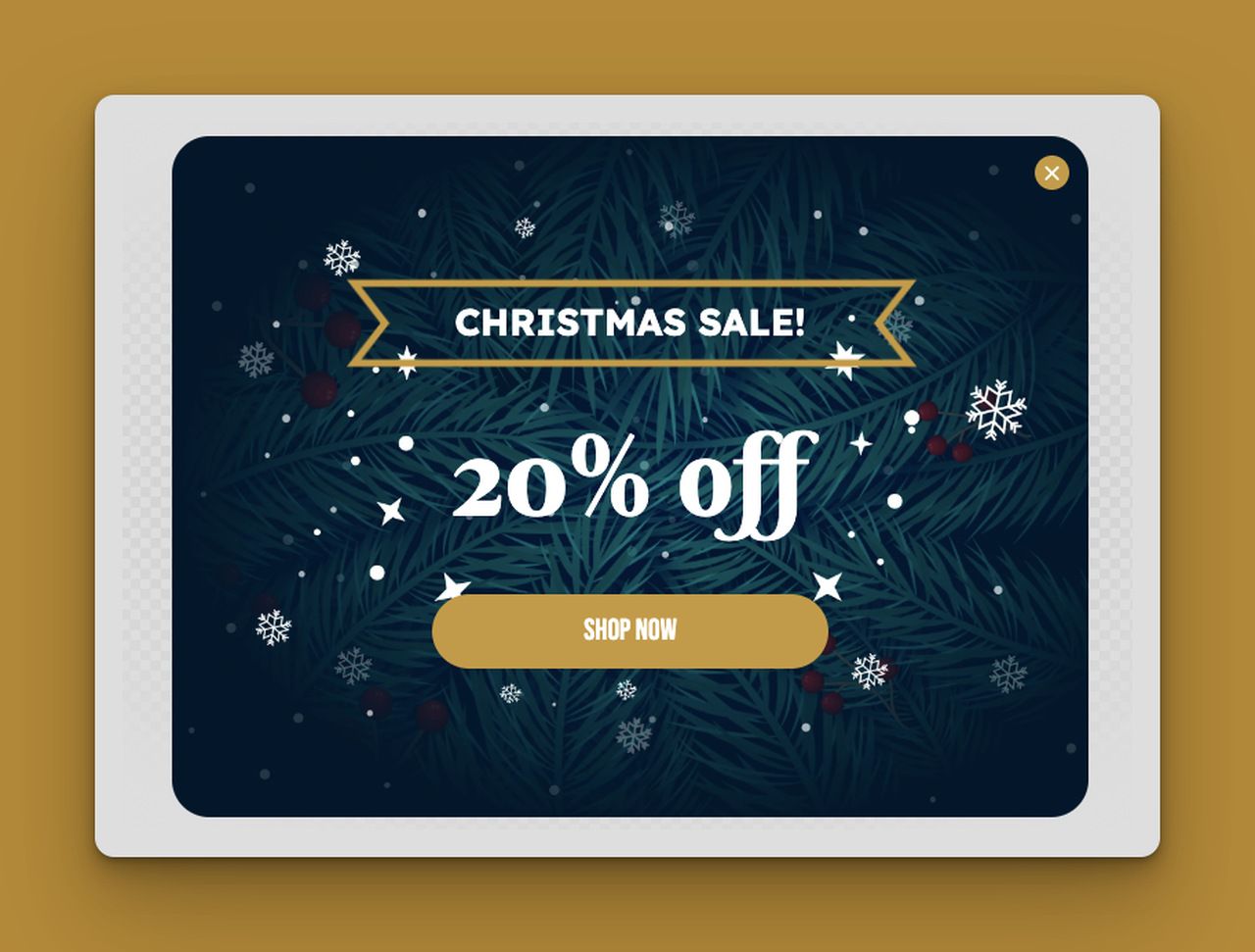
One overlay per session. A sales bar plus a wheel plus an exit coupon is how you lose the page to CLS and to the visitor. For the offer calendar itself, use promotion popups.
Common questions
How do you know the popup made the sale and not the product?
Hold out a slice of traffic. Run the overlay against nothing for a full week including a weekend, and compare orders rather than overlay clicks. Attribution inside a popup tool counts every order that saw the campaign, which on a storewide bar is every order you were going to get anyway.
Should a sales popup fire on a blog post?
Not if the post earns search traffic you care about. A promotional overlay on a page someone opened from a search result is the exact case Google's interstitial guidance describes, and the reader arrived for the article. A link to the relevant collection inside the body will do more and costs nothing.
Does urgency copy still work?
When the deadline is true. Real stock counts and published sale windows give the shopper a reason to decide now. A timer that resets on refresh is checkable in a private window, and 19% of Baymard's respondents already declined to trust the site with a card before you gave them a second reason.
Is a free-shipping bar better than a discount overlay?
Usually, on two counts. It answers the objection 40% of Baymard's non-browsing respondents actually raised, and it raises order value instead of cutting margin on the order you already had. It also has no modal to dismiss, so it can stay visible across collection and cart pages without spending a session's one interruption.
Which builder fits increase sales popups
The tools this page argues for, best fit first, with the entry price and billing basis taken from each vendor’s own pricing page.
| Tool | Best for this job | Free tier | Starts at | Metered on |
|---|---|---|---|---|
| OptiMonk | Product recommendations and shipping bars you will personalise | Free plan | $29Essential, per month | Monthly pageviews |
| Privy | An overlay that also starts the email or SMS follow-up | Free trial only | $24Pop-ups & Displays, per month | Monthly pageviews |
| Sleeknote | Promotion design across several domains | Free trial only | $69Core (0–25,000 monthly visitors), per month | Monthly visitors |
| OptinMonster | Split tests and the report that justifies the offer | None | $9Basic, per month, billed annually | Campaign impressions |
| Poptin | A small store testing offers without a contract | Free plan | $25Basic, per month | Monthly visitors |
Prices researched September 2026. Several tools charge a different rate after the first term; each tool’s own pricing breakdown carries the renewal figure. Where these numbers come from is set out below.
How this page was researched
- Prices come from the vendor, on a date
- The 5 figures in the table above were read from each vendor’s own pricing page in September 2026, not from a feature feed or a comparison chart. Each tool’s pricing breakdown links the page the number came from and states the date it was checked, so a figure that has since moved is visible as stale rather than presented as current.
- Review sentiment is quoted, not scored
- G2’s own summary was collected for OptiMonk and OptinMonster in August 2026. Privy, Sleeknote and Poptin have no such summary on G2, so they appear here without one rather than with a rating we made up. No page on this site prints a star score, because a single number hides the trade-off the comparison exists to explain.
- Every figure names its source
- Conversion and abandonment numbers on this page are vendor and institute datasets with the publisher, the sample size and the publication date attached, so you can weigh who measured them. Where two datasets disagree, both are shown rather than averaged into one comfortable figure.
- Who wrote it
- Emel Dalabasmaz, SEO Executive at Flatart, working in popup builders, conversion rate optimization and on-site messaging. Full profile and credentials, and what this site is and is not.
Other popup types
About the author

SEO Executive at Flatart
Emel Dalabasmaz graduated in Advertising and Public Relations from Anadolu University. She began in social media and carried that grounding — content, brand communication and performance — into SEO. For more than ten years she has worked on growth for brands across a range of industries, pairing a communications perspective with data and technical analysis to build a digital presence that holds up over time. At Flatart, she has worked for more than ten years with over 250 brands and set up popups for more than 70% of them. She has tried the popup tools covered by PopupBuilder.io for agency customers and read G2 customer reviews as part of her product research.
- Education
- Advertising and Public Relations, Anadolu University
- Writes about
- Popup builders, Conversion rate optimization, On-site messaging, SaaS pricing research, SEO, Technical SEO, Content strategy, Digital marketing